Have you ever paused to reflect on how structural racism impacts the first years of a child’s life? When we think about early childhood (the period from birth to age 6), we usually associate it with discoveries, play, affection, and learning. However, for thousands of Black children in Brazil, this stage is also crossed by invisible — and often brutal — barriers that directly impact their physical health, mental well-being, and their full right to simply be a child.
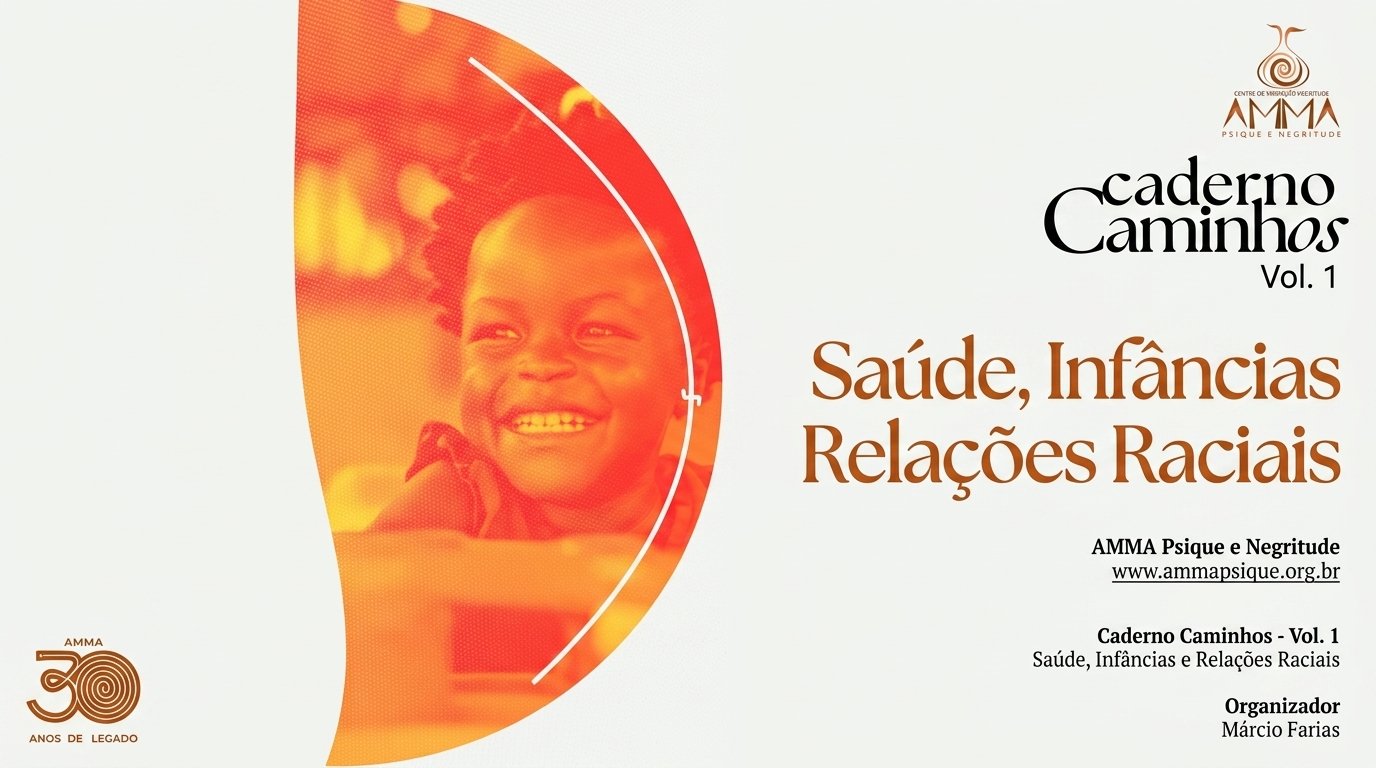
To shine a light on this urgent debate and offer concrete paths toward transformation, AMMA Psique e Negritude — an institution with over 30 years of legacy in producing knowledge at the intersection of mental health and racial relations — has just launched the first edition of Caderno de Pesquisa Caminhos (Vol. 1): Health, Early Childhood, and Racial Relations.
Whether you are an educator, healthcare professional, psychologist, researcher, or someone committed to building a more just and anti-racist society, this is an essential read.
What Will You Find in Caminhos Research Journal Vol. 1?
Edited by Márcio Farias, this first volume brings together rigorous scientific investigations, community experience reports, and deep reflections on how to articulate research, training, and public policies in favor of Black children’s well-being.
Here are some of the key highlights featured in this issue:
1. Methodological Confluences and “Aquilombar” in Scientific Practice
By Clélia Prestes, Marcos Amaral, and Nathália Machado (AMMA)
How can we produce science in an ethical, affectionate, and politically engaged manner? Inspired by the teachings of Master Nego Bispo, the authors show how the confluence of knowledge among six research groups from universities across the country allowed for the creation of a methodology that actively listens to children, their families, and territories — bridging the psychic and political dimensions of care.
2. The Impact of Armed Violence on Early Childhood in Maré
By Tainá Alvarenga and Gisele Martins (Redes da Maré)
In a powerful and necessary account, the authors analyze how daily police operations in the Maré favela complex (Rio de Janeiro) violate fundamental rights. The disruption of school routines, the closure of public health centers (SUS), and the ongoing trauma experienced by children aged 0 to 6 reveal the deep scars left by state violence on child development.
3. Black Children and the Right to Education with Joy
By Míghian Danae
Has school been a space of welcoming or silencing for Black children? Professor Míghian Danae advocates for a pedagogy rooted in joy and sensitive listening, drawing on alacrity (as conceptualized by Muniz Sodré) and play as political acts of resistance, belonging, and emancipation.
4. Impacts of Daycare Access on Health in Early Childhood
By Camila Fernandes, Leonardo Silveira, Huri Paz, and Matheus Gato (AfroCebrap)
Public daycare centers are much more than spaces for child care: they are pivotal for food security and emotional development. The authors highlight the vital role of public early education in combating malnutrition and discuss the profound racial and territorial inequalities in accessing this fundamental right.
5. Applied Research, Public Policy, and Transnational Mental Health
This volume also features a note on the international research project led by Emiliano de Camargo David focusing on hospitalization, substance abstinence, and racism (across contexts in Brazil, Colombia, and the US), alongside articles on how applied research should qualify public policies and psychology practices in Brazil. To conclude, a special curated selection of cultural and reading recommendations in anti-racism and mental health is included.
Caring for Black Childhoods is Building the Future
Building a future where Black children can grow up free, healthy, nurtured, and fully recognized in their humanity is not just a responsibility of the state, but an ethical commitment for society as a whole.
Caderno Caminhos Vol. 1 is an invitation to reflection, affection, and collective action. It is a rich, evidence-based, and essential resource for transforming professional practices and strengthening anti-racist networks of care.
👉 CLICK HERE TO DOWNLOAD AND READ THE FULL EBOOK (PDF) 👈
Be sure to share this post with your colleagues, educators, and support networks. Let’s work together to make anti-racist action a daily practice!