Post-Congress
Enrollment
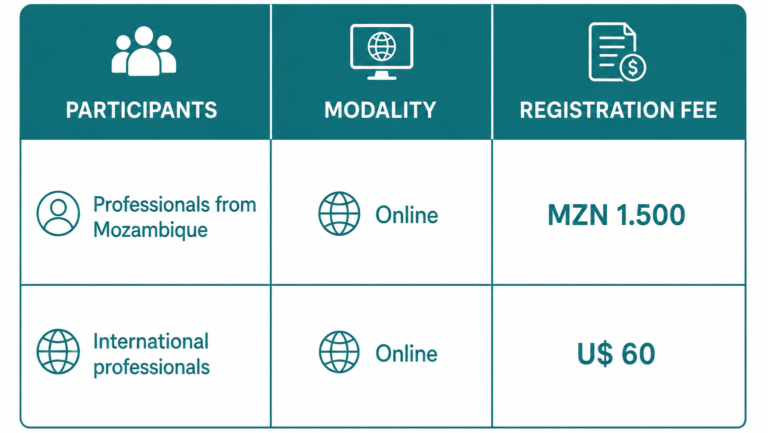
Source: World Bank Group
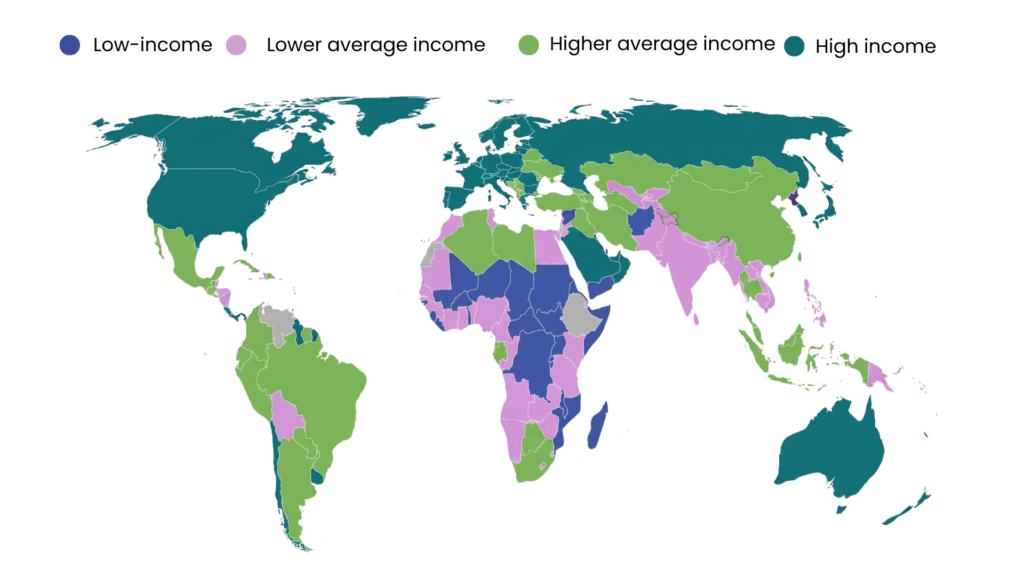
Countries are classified annually on July 1—the start of the World Bank’s fiscal year—based on GNI per capita data (using the World Bank Atlas method) from the previous calendar year. For fiscal year 2026, the classification uses 2024 GNI per capita. The map boundaries represent those in place as of 2020 and do not change over time. Country boundaries or names do not necessarily reflect the official position of the World Bank Group. This map is for illustrative purposes and does not imply the expression of any opinion by the World Bank regarding the legal status of any country or territory, or the delimitation of borders or boundaries.
Rationale
The Psychoanalytic Circle of Mozambique and its partners, building upon years of work in the fields of psychoanalysis and psychodynamic psychotherapy in Mozambique, reaffirm their commitment to remaining attentive to social and political dynamics both within the country and globally. In this spirit, the “Post-IV International Psychoanalysis Congress: Children, War, and Persecution – Revisiting Wounds, Reinscribing Hope” is currently being organized as an online event.
The Post-Congress event is scheduled for September 19, 2026.
The primary objective of this event is to create a space for critical reflection on the various forms of organized violence inflicted upon children and their families—including military violence, political and religious persecution, torture, the forced disappearance of parents, genocide, forced displacement, extreme poverty, and social exclusion. Many children and adolescents are forced to fight, carry weapons, or provide logistical support, such as transporting ammunition or preparing food for military purposes. Girls, in particular, are frequently victims of sexual exploitation. In northern Mozambique, armed groups are observed recruiting young people into their ranks under the banner of a purported Islamic jihad.
The Congress aims to examine the relational world—the space where internal and external worlds intersect—by exploring the transgenerational effects of violence and their psychological implications. Discussions will focus on therapeutic approaches that integrate and combine psychoanalysis with specific, context-sensitive interventions. The event also seeks to promote a critical re-examination of psychoanalytic theory and practice from a Global South perspective, valuing local knowledge, experiences, and practices. The central theme of this 4th Congress invites an in-depth reflection on psychological suffering in children over time and throughout their development, with an emphasis on social reintegration and the complex, enduring processes of reconciliation.
Transgenerational processes contributing to the perpetuation of suffering and violence will also be discussed, in an effort to understand and intervene in the traumatic cycles that span generations.
Thematic Areas
With this theme, we aim to foster a deep and comprehensive reflection on the effects of violence on childhood and youth, structuring the debate around three interconnected dimensions: individual, relational/familial, and sociocultural/transgenerational.
Individual aspects
1. What is the impact on child development resulting from exposure to military, religious, and state violence?
2. How do psychoanalytic listening and the construction of narratives—by both the child and the family—contribute to integrating experiences that are often incomprehensible yet insist on being understood?
3. How do trauma-affected children incorporate these experiences into their life plans, self-understanding, and worldview?
4. What psychic marks do these experiences leave on individuals?
5. What risk factors are children exposed to in contexts of war? And what protective factors can be identified in those same contexts?
6. How can we support young people in rediscovering paths of healthy and progressive development, even in the face of tensions and conflicts that block or disrupt their growth?
Familial and relational aspects
1. What risk and protective factors are present in family dynamics within contexts of violence?
2. How can we encourage adults—even in cultures where silence regarding feelings prevails—to talk to children and adolescents about emotions, trauma, and adverse circumstances?
3. What is the role of parents in these situations, and how do they respond to their children’s requests for help—whether explicit or implicit?
Sociocultural and transgenerational aspects
1. In what ways do the transgenerational legacies of colonialism continue to influence the suffering of families and communities?
2. How can we integrate psychoanalytic listening and care with traditional forms of healing found in local cultures?
3. How do these cultures shape both protective and risk factors in coping with trauma? 4. How can psychoanalysis learn from the knowledge and practices of traditional medicine, especially regarding the etiology, prevention, repair, and healing of psychological suffering in children?
5. What effects do forced displacement, exile, continuous stress, and sequential trauma have on children and their families?
6. How do theories and practices inherited from colonial models still contribute today to the reproduction of violence, poverty, and social exclusion?
7. To what extent can we speak of “collective traumatization,” both among colonized peoples and among colonizers?
8. Given that many armed conflicts occur in countries like Mozambique—where there is a shortage of psychoanalysts, psychotherapists, and mental health professionals—what care models might be effective in serving thousands of children and their families? What could be considered “best practices” in these contexts?
9. How can community projects be established that reconnect young people with play, creativity, and self-expression—through music, visual arts, theater, storytelling, among other forms?
10. How is it possible to promote both individual expression and collective activities that have a psychotherapeutic nature and that, through informal education, teach tolerance for diversity, respect for differences, and conflict resolution without the use of violence?
11. How can the needs of young people who have undergone severe traumatic experiences be adequately met?
12. And how can we explore themes of ethics and philosophy with young people, so as to develop their capacity for critical thinking and their ability to view the world from both their own perspective and that of others?
These are the starting points for our proposal to build interventions that, we believe, can be more powerful, humane, and transformative.
Works
Presentations may only be delivered in person in Maputo.
Presentations may last a maximum of
20 minutes.
We welcome presentation formats other than formal lectures, such as films or dramatic performances; however, interested parties must contact the Scientific Committee regarding these options. Abstracts should be between 250 and 500 words and must include the author’s name, institutional affiliations (if applicable), country, and email address, as well as a summary and a brief biography (up to 10 lines). The Congress will be conducted in both Portuguese and English, and abstracts may be submitted in either language.
Please send submissions to the following email address: congress@criancaguerrapersecucao.com
Country and its participants
No Images Found!
No Images Found!
©2026 Developed by L94 Design