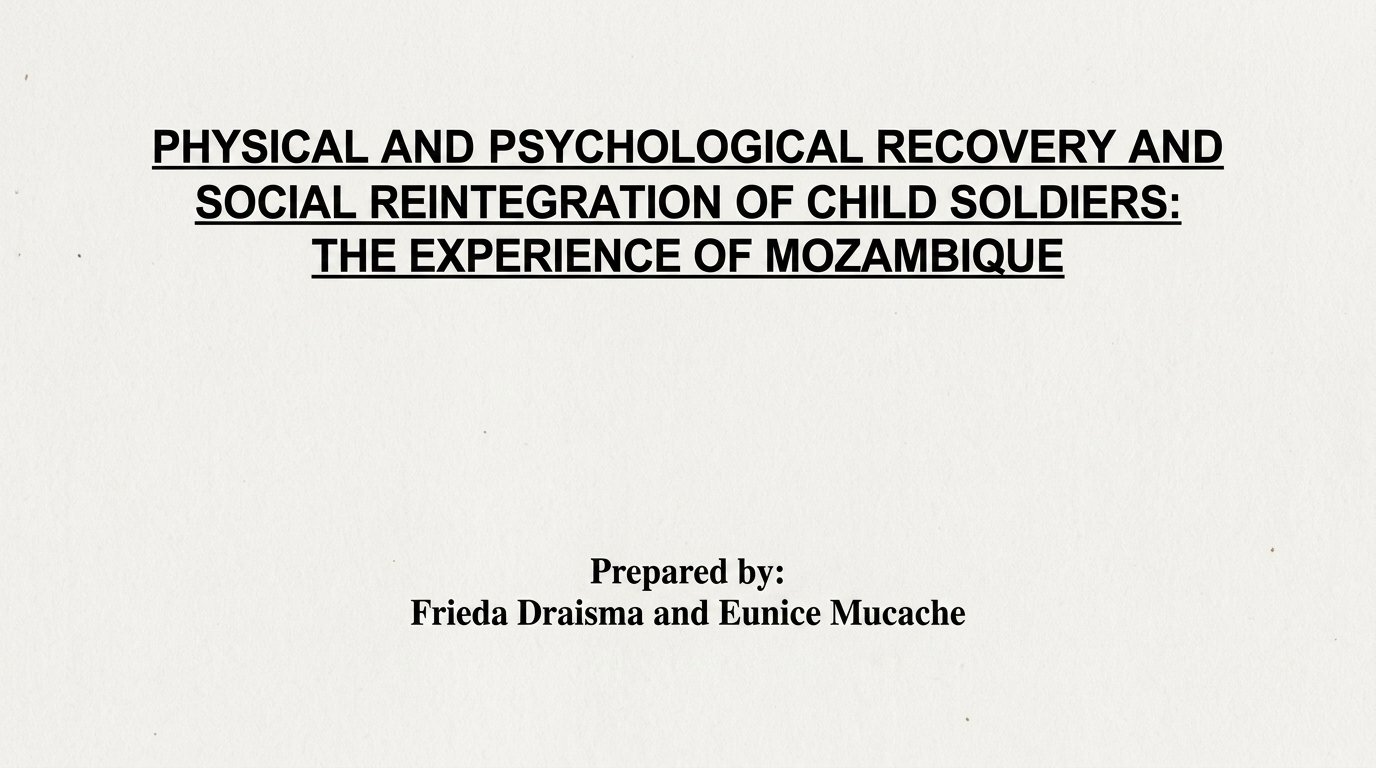
For nearly three decades, Mozambique endured the crushing weight of armed conflict — first during the liberation struggle against colonial rule and subsequently through a devastating civil war. Beyond widespread destruction and loss of life, the conflict left a profound scar on the nation’s youth: the forced recruitment of thousands of child soldiers.
Unlike other global contexts where young people joined military ranks voluntarily, recruitment in Mozambique was overwhelmingly coercive. Children aged 8 to 14 were abducted from their communities to serve in combat or auxiliary roles, while young girls endured forced labor and captivity.
Post-War Challenges: Between Therapy and Tradition
Following the 1992 peace agreement, the country faced a monumental challenge: How do you restore humanity, community, and hope to over 25,000 young people who grew up inside military structures?
In their landmark report, researchers Frieda Draisma and Eunice Mucache highlight several crucial findings:
- Resilience and Ongoing Gaps: The study evaluates structured initiatives like the Family Tracing and Reunification Programme and the Red Cross’s Healing Through Play project, while addressing key challenges such as the oversight of demobilized girls and the need for sustainable livelihoods.
- The Power of Traditional Healing: In a country severely lacking mental health professionals, traditional purification rituals and ceremonies led by community elders proved significantly more effective for social reintegration than conventional Western psychological therapies.
- Acceptance Without Stigma: Communities widely acknowledged that these children acted under severe coercion (“they were forced to do it or be killed”), allowing families to forgive and reintegrate them without enduring hostility.
Looking to Deepen Your Understanding of This Case Study?
Whether you are researching human rights, post-war social welfare, community psychology, or African history, this comprehensive report is an essential read[cite: 1]. Inside, you will find detailed statistical analyses, evaluations of field interventions, and policy recommendations for child protection in armed conflict settings[cite: 1].
👉 CLICK HERE TO READ AND DOWNLOAD THE FULL EBOOK (PDF) (Access the complete original document)